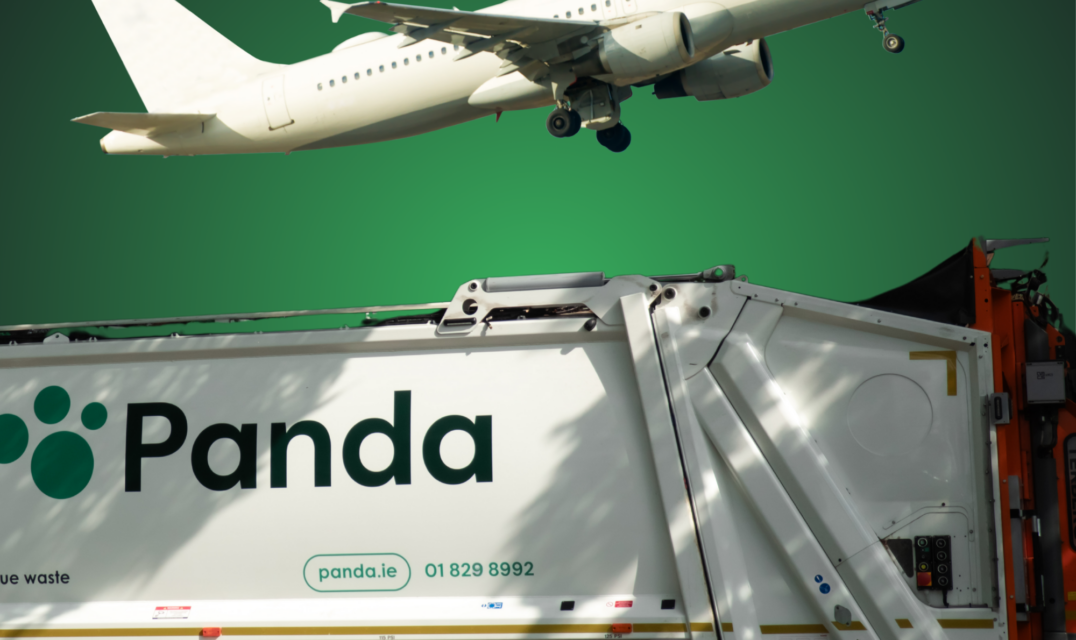
At an airport as busy as Dublin, there’s little room for waste to go off course. Between 100,000 and 123,000 passengers pass through its terminals every day, supported by a large operation working behind the scenes to keep everything moving.
In February 2026, we began a five-year zero-to-landfill partnership with Dublin Airport. Our job is to give more than 12 waste streams a clear identity, journey and destination. Here’s how we’ve put that into practice so far.
A data-driven approach to airport waste management
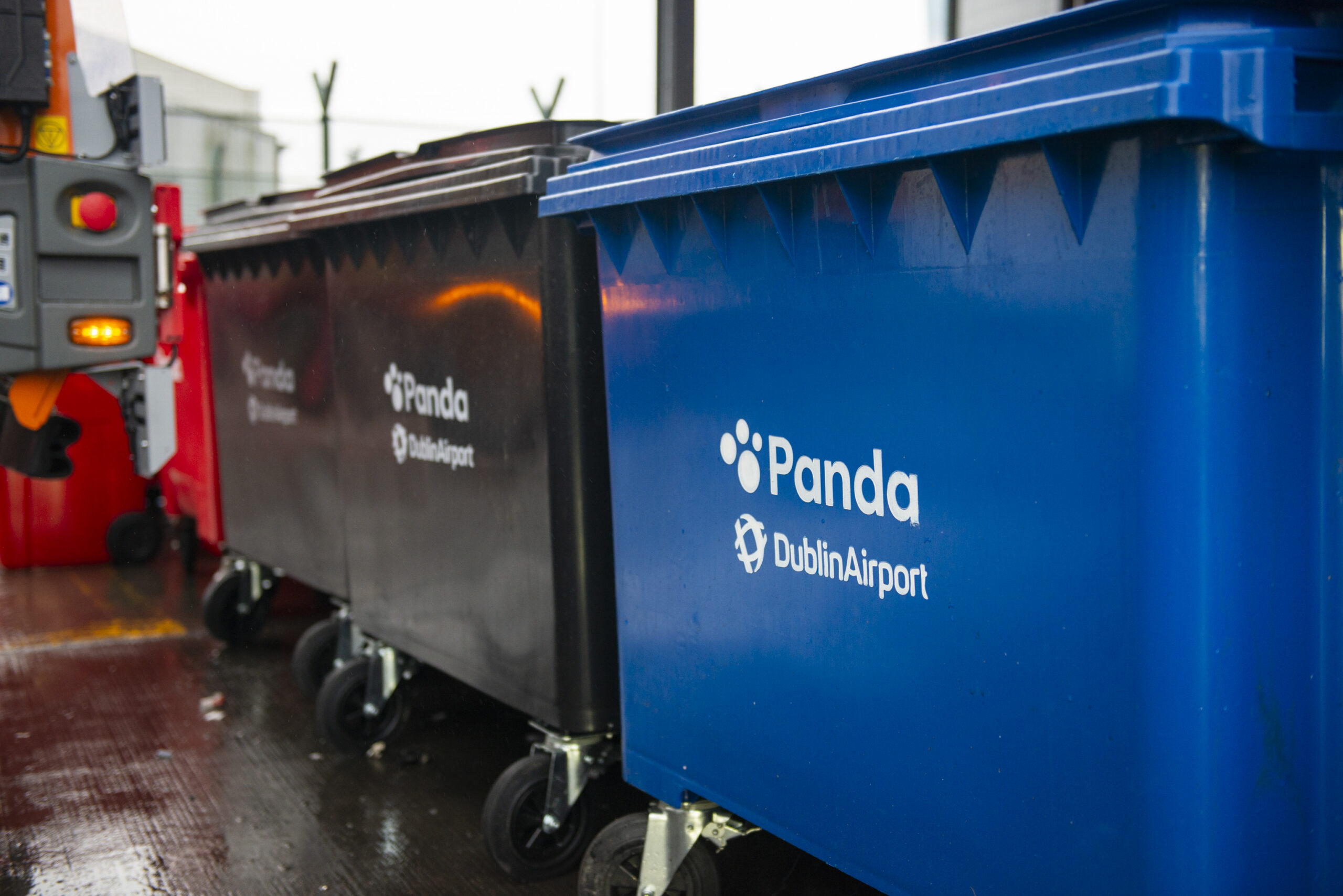
We introduced RFID-tagged bins, each linked to a specific location. Much like a hotel keycard is linked to a specific room, every bin can now be identified by where it belongs and where it’s being used.
We then mapped collection points across the airport and began weighing materials closer to source. Together, these changes show where waste is generated and where it goes next, so our team and daa can spot trends, track performance and find further room to improve.
Within months, Dublin Airport’s recycling rate rose from 51% to 66%, reaching its 2030 recycling target four years early.
Cutting journeys, water and diesel
Bins at Dublin Airport used to be cleaned with fixed power washers at dedicated washing bays, which meant regular journeys across the apron (the area where aircraft are parked, loaded and refuelled). We replaced this with a mobile, self-contained bin-washing unit that goes to the bins instead.
The change cut trips from 40 to four, a 90% reduction. It also reduced weekly diesel use by 92% and water use by around 71%.
A smooth changeover on Pier 1
When Dublin Airport replaced the passenger seating on Pier 1, we worked alongside the project to keep it moving without disrupting day-to-day operations.
Over five weeks, we delivered 35-yard roll-on roll-off (RORO) skips to the north-western corner of Terminal 1, timed around the seating works. All recoverable metal went for recycling, and we donated the rebate to daa’s chosen charities.
It shows how waste management can fit into a live airport without getting in the way of major works.
Results you can measure
In a single week, we managed 105 tonnes of waste at Dublin Airport. That’s more than the take-off weight of a fully loaded Airbus A321.
Read the full Dublin Airport case study here
“What has impressed us most about Panda is their willingness to challenge traditional ways of working.
Innovations like chipped bins linked to specific locations and introducing a mobile bin-washing unit have delivered significant operational and environmental benefits. This has also enabled more accurate reporting, better engagement, and a fairer, more accurate approach to cost allocation.”
Naomi Vasilca, Contracts Operations and Performance Manager, daa
A next destination for every material
Every waste stream at the airport is managed with its next destination in mind. In a zero-to-landfill partnership, material that can’t be recycled still needs somewhere useful to go, and that’s where our wider operation comes in.
Each year, we convert around 500,000 tonnes of non-recyclable material into refuse-derived fuel (RDF), enough to power around 100,000 homes and businesses. We also produce solid recovered fuel (SRF) from suitable dry commercial materials. At Millennium Park, we recover materials hidden in black-bin waste, separate them and put them back into use.
Beyond the terminal
We also support dnata’s catering and retail operations and Aer Lingus. Each brings its own demands, and each relies on the same things: clear visibility, good coordination and accurate reporting.
Need a helping paw with your waste management strategy? Contact our team to find out how we can help your business’s sustainability goals take off.