At Panda, we believe every bin tells a story; not just about waste, but about daily life, habits, routines, and small choices people make. We’ve learned that improving recycling isn’t just about systems or instructions, but about understanding those everyday moments and finding ways to support them.
That’s how our Cleaner Bin Imaging Service (CBIS) came to be. Backed by Repak and supported by the Irish Waste Management Association, this technology-led but people-focused approach improves recycling quality through feedback, education, and simple insight.
Recognised as the winner of The Green Technology Award (over 50 employees) at the Green Awards 2026, and Highly Commended at the Let’s Recycle Awards 2026, the Cleaner Bin Imaging Service isn’t just an innovation; it represents a shift. A shift in how recycling quality is monitored, managed, and, most importantly, improved.
The Cleaner Bin Imaging Service, Explained
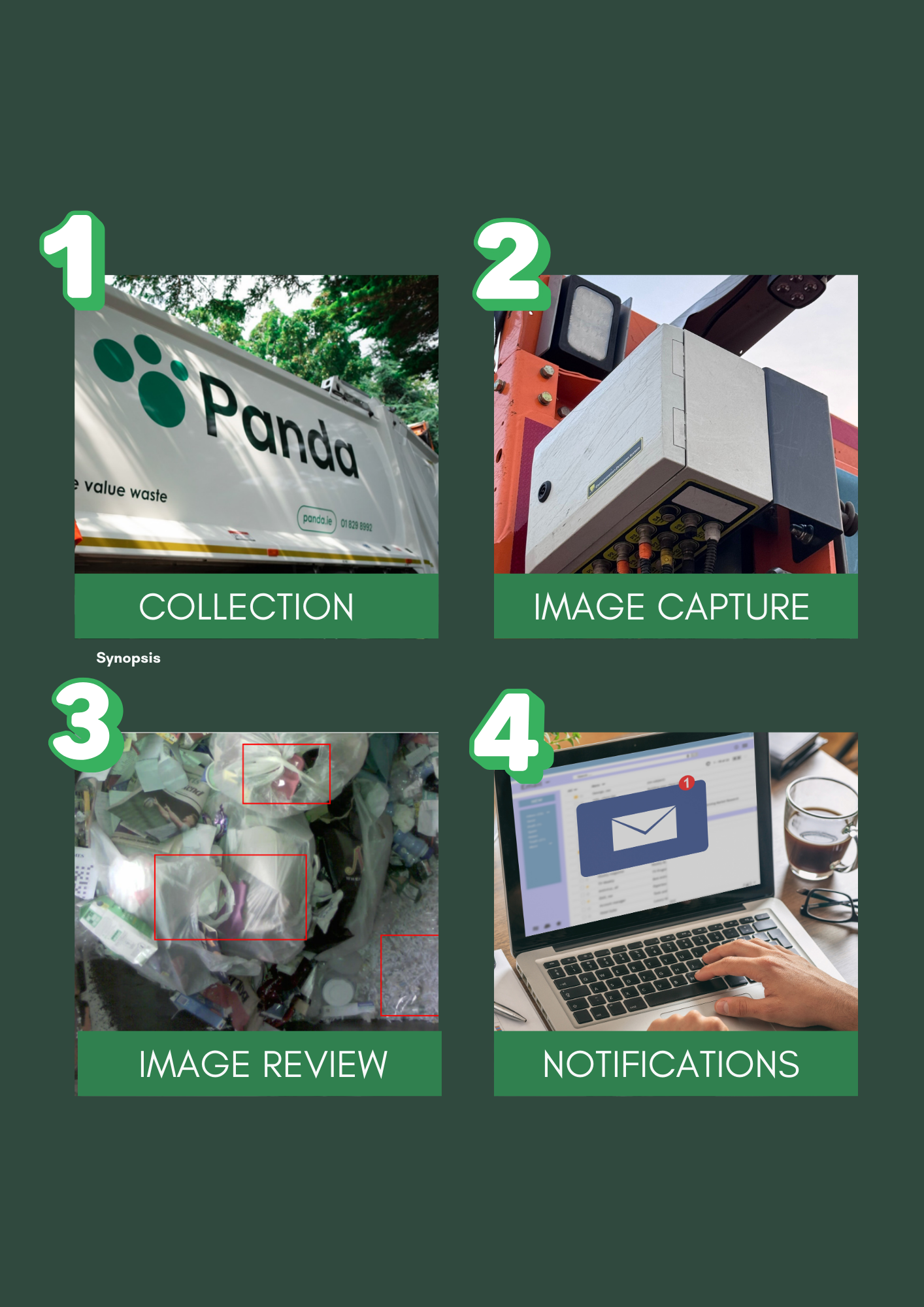
From years of seeing the recycling stream up close and a shared hope that there was a better way to handle materials that still have value, we built it into our existing collection process. The service works by using simple, secure technology to help households recycle more accurately, without changing how collections happen day to day.
To support its rollout, we created the Cleaner Bin Imaging Service page on our website to explain how, first of all, a camera would take a photo of the bin contents when lifted. Second, if there were any contamination, a personalised message would follow to explain the issue. and most importantly — this wasn’t about blame, it was about helping everyone recycle better
Brian McCabe, our Chief Executive Officer, added:
“Our purpose is to increase recycling levels and change the habits of our customers so they know how to recycle properly and eliminate contamination within bins.”
To support its rollout, we created the Cleaner Bin Imaging Service page on our website to explain how:
Tackling Recycling Contamination at the Source
This technology system changes things in how it improves recycling, not through pressure, but through an understanding partnership between consumer and business. In other words, the relationship between our customers and Panda as their trusted service provider.
Every corrected bin, informed household and cleaner collection all add up to measurable, lasting environmental change. And by tackling contamination right where it begins — at the household bin — every cleaner collection means materials that can truly be recycled, supporting a more circular, low-carbon economy.
As one customer put it best:
“I must commend this entire initiative. I think it’s a great way to get recycling levels up to where they need to be.”
Beyond Bins: Its Impact on the Environment
The impact of the Cleaner Bin Imaging Service has been both immediate and measurable. Before it was introduced, household recycling contamination averaged around 50%, meaning half of what was collected couldn’t be recycled. Afterwards, and within months of this system rollout in South Dublin, contamination rates dropped to 5%, a remarkable change that came with immediate benefits such as:
- Cleaner, higher-value recyclate, suitable for reprocessing into new materials.
- Reduced transportation and re-collection emissions, as fewer loads were returned or reprocessed.
- Greater contribution toward Ireland’s national recycling targets, aligning with the EU Waste Framework Directive goals.
More than just a tool, it maximises the circularity of the materials we collect, helping us to move closer to a truly sustainable system.
The Origins, Challenges and Present
In 2012, we first conceived the idea of detecting contamination inside household recycling bins by installing a basic camera and enclosure in the hopper of a bin truck. Over the following six years, though, the system had to go through repeated cycles of refinement, programming, and testing until it matured into a reliable, fully functioning solution.
By late 2018, this work resulted in the Cleaner Bin Imaging Service becoming fully operational. It was serving 13,000 customers in Fingal across ten fortnightly collection routes, but plans for wider rollout were delayed. The COVID-19 period forced this to a halt, only to resume back in May 2025.
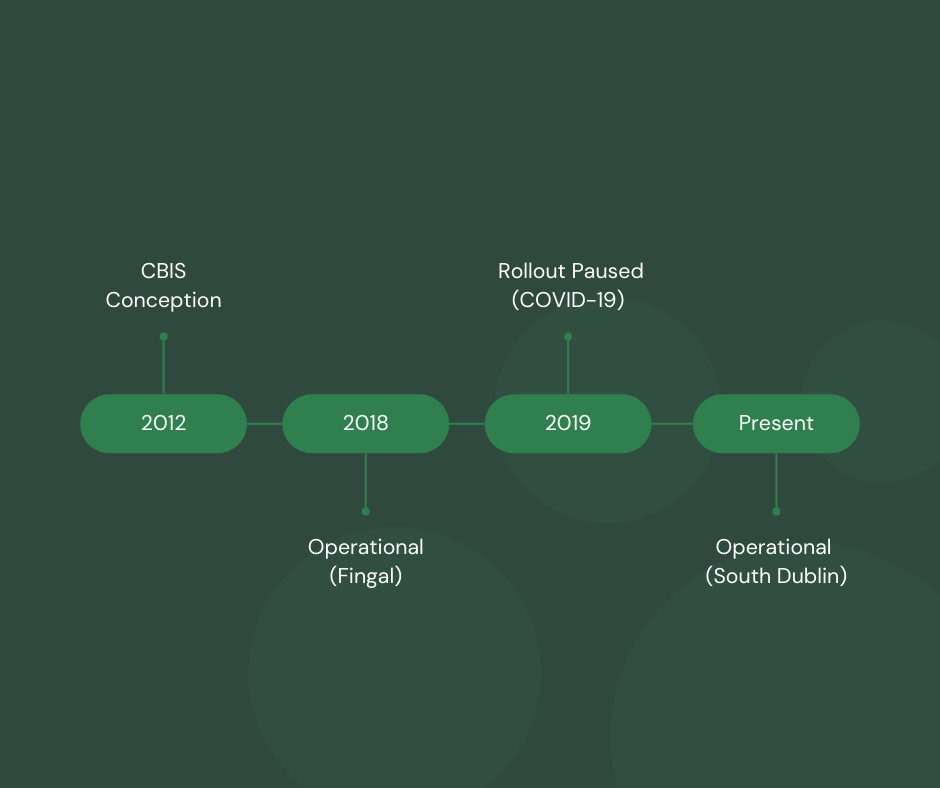
At that stage, however, we selected different, more suitable routes and extended the system to five collection trucks (servicing South Dublin).
To date, we have sent over 60,000 letters, each supporting small shifts in recycling behavior that, collectively, make a significant difference.
The Cleaner Bin Imaging Service, Overview
The Cleaner Bin Service represents a clear shift in how recycling quality is improved. By combining technology with education and clear feedback, this system has shown that better recycling starts with better understanding.
Cleaner bins lead to cleaner collections. Cleaner collections lead to real environmental gains. And when people are supported with the right information, lasting behavior change follows.
Together, these small, everyday actions create a system that works better for our communities, the environment, and the future of recycling.
The impact of the Cleaner Bin Imaging Service has been both immediate and measurable. Before it was introduced, household recycling contamination averaged around 50%, meaning half of what was collected couldn’t be recycled. Afterwards, and within months of this system rollout in South Dublin, contamination rates dropped to 5%, a remarkable change that came with immediate benefits such as
Cleaner, higher-value recyclate, suitable for reprocessing into new materials.
More than just a tool, it maximises the circularity of the materials we collect, helping us to move closer to a truly sustainable system.